
Research Engagement
The communication of research to the public and the engagement of the public are essential parts of research. Research engagement is a priority of the Family Genomics Research Group at Maynooth University.

Professor Lorna Lopez Showcases FamilySleeps Research at European Research Forum
Professor Lorna Lopez recently presented our ERC-funded FamilySleeps research project at the Forum on the Future and Impact of European Research, Science and Technology, held in Dublin to mark the visit of the European Research Council (ERC) Scientific Council.
The high-profile event, organised by Research Ireland, brought together ERC awardees, policymakers, industry leaders and members of the international research community to celebrate the impact of ERC-funded research and discuss the future of European science and innovation. The forum was attended by An Taoiseach Micheál Martin and Minister for Further and Higher Education, Research, Innovation and Science James Lawless.
During the forum, Professor Lopez shared her ERC journey and highlighted the FamilySleeps project, which is investigating how genetics, sleep and circadian rhythms contribute to neurodevelopmental conditions. Her presentation showcased the excellence and international impact of research being carried out at Maynooth University and demonstrated how fundamental research can improve our understanding of brain health and inform future healthcare.
Following the event, Research Ireland Chief Executive Officer Diarmuid O'Brien praised Professor Lopez's contribution, noting that her work "exemplifies the excellence, ambition and impact of Ireland-based research" and that sharing it with an international audience highlighted the strength of Ireland's research community. Please follow this LinkedIn link to see the video.
Invitation to speak in the Current Topics in Visual & Circadian Neuroscience seminar series
Professor Lorna Lopez was invited to speak in the Current Topics in Visual & Circadian Neuroscience seminar series, hosted by the Translational Sensory and Circadian Neuroscience Unit (MPS/TUM/TUMCREATE). In her presentation shown here, she discussed emerging evidence for the genetic links between sleep, neurodevelopmental conditions, and neuropsychiatric traits, highlighting findings from family-based genomic studies. The seminar series attracts an international audience of researchers and students and has been running since 2022, with recordings made available through the organisers' YouTube channel.

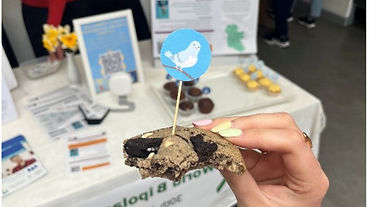


Celebrating World Bipolar Day: Ambient-BD, Maynooth University
Yesterday (March 30th) was World Bipolar Day, a day which aims to bring global awareness to bipolar disorders and eliminate social stigma and discrimination. The date is the birthday of Vincent Van Gogh, who is believed to have had bipolar disorder.
Bipolar disorder is a mental health condition characterised by recurrent episodes of mania or depression that can last for weeks or months. It affects 1-2% of the population with an annual relapse rate of approximately 25% per year. Bipolar disorder is associated with a substantially increased risk of completed suicide, estimated to be 20-30 times that of the general population.
Sleep disturbances and circadian rhythm disruptions are also common in bipolar disorder. Such disruptions can predict changes in mood, cognition, activity, and energy metabolism. Important research has highlighted that changes in sleep/wake patterns often precede episodes of mood disturbances in patients with bipolar disorder. Therefore, research investigating these patterns may offer viable targets for early intervention.
In the Ambient-BD project here in the Biology Department at Maynooth University, we are testing novel radar-based methods for collecting data on sleep/wake patterns in people with bipolar disorder and healthy controls. To do this, we are comparing the findings to sleep and circadian data collected from existing gold-standard measures (e.g., polysomnography), which are often invasive and only capture brief snapshots of sleep architecture and circadian function.
By using radar technology for non-contact data collection, we can acquire sleep and circadian patterns passively and over longer periods of time to investigate how long-term sleep and circadian disruptions may predict episodes of mania or depression. This research could provide critical insights into personalised treatment and care for people with bipolar disorder.
To mark the occasion, we set up a stand on Maynooth University campus to spread awareness about bipolar disorder and information on why circadian rhythms are important aspects of our day-to-day lives. Educational components included posters, facts about bipolar disorder, materials from AWARE, and information about our study methodology.
We also had a successful engagement element: people filled in the Chronotype Questionnaire to discover whether their circadian rhythms indicate morningness, eveningness, or an inbetween. Depending on their result, they got a home-made sweet treat with an image of a morning lark, night owl, or a balanced dove. We tracked the spread of chronotypes on our chart with stickers, too. Results showed that most people were intermediate chronotype (27), followed by evening (15), and morning (6). We got some positive feedback on our materials and received lots of expressions of interest in Ambient-BD!
We are so lucky to be currently working with many research participants with bipolar disorder in Ambient-BD who are helping us test this novel technology that we hope will inform the future of measuring sleep and circadian rhythms. If you have bipolar disorder, want to learn more, or get involved, you can reach us at ambientbd@mu.ie, we would love to hear from you!
Recognition of the role of public engagement in the Family Genomics team

On the 28th November I had the pleasure of attending FutureNeuro research day, a collaborative event where funded researchers, students, and colleagues come together to present, discuss, and share their work. The event provided a valuable opportunity to exchange ideas, place individual projects within a broader research context, and learn from the diverse expertise within the research centre.
I was grateful for the opportunity to present my own work, which uses new methods to explore short tandem repeats. These are an under-characterised genetic feature that plays a significant role in the biology of many heritable neurological and neurodevelopmental conditions. Improving our understanding of these genetic features promises to advance knowledge of brain development and neurological disease and may ultimately help identify new therapeutic targets to benefit patients and research participants. The opportunity to engage the expertise of the research centre in tackling technical challenges, exploring research applications, and characterising the context of this work in the wider scientific literature was invaluable.
Research Day also recognises the many ways individuals contribute to the scientific community through awards that acknowledge not only direct research achievements, but also efforts in public engagement and inspiring the next generation of scientists. Research is inherently collaborative, and no single individual can embody all the expertise required to address complex scientific questions. Over the last several decades the roles in which the wider communities play in research is being increasingly recognised, and their ability to contribute to existing gaps in our knowledge base has been identified as a key area of development in scientific research.
In clinical and human research especially, it has become increasingly clear that meaningful progress requires the inclusion of lived experience and public perspectives. Engaging research participants and the wider community helps ensure that research is relevant, effective, and truly impactful.
I am incredibly fortunate to be part of Lorna’s research team, which places great value on bridging these knowledge gaps through collaboration and engagement. I am also grateful to be part of the FutureNeuro network, a community similarly committed to engaging patients and the public to improve research quality. Through participation, and creating opportunities for collaboration, my own research focus has been shaped toward more meaningful and impactful outcomes, with the potential to benefit patients, researchers, and the public both nationally and internationally.
With the support of Lorna, the Family Genomics Team, collaborators in Maynooth, and members of the FutureNeuro network in the Communications and Operations teams, I was honoured to contribute and/or lead in outreach initiatives such as My Moving Brain, Maynooth Summer School, Maynooth LC Practical Demonstrating and both Science Night and Sensory Friendly Science Night, and also engage with other researchers in workshops and other training. For my role in these events I was nominated and subsequentely awarded the FutureNeuro Education and Public Engagement Champion award.
I would like to sincerely thank everyone involved in making these events successful, and all those who contributed their time, expertise, enthusiasm, and support. It means a tremendous amount to me, and it has been such a pleasure seeing the impact this work has accomplished. Looking forward to what we will achieve in 2026!


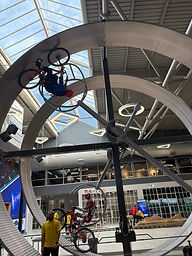


FutureNeuro Townhall: A day of science, sport, and connection
The FutureNeuro Townhall took place on 11 September at the Explorium – National Sport & Science Centre in Dublin.
It was a fantastic opportunity for FutureNeuro members Jacob Kennedy and Giulia Gaggioni to connect with other people from across the network.
The afternoon began with A Year in Highlights presented by Prof David Henshall, FutureNeuro Centre Director. This was followed by a presentation from Dr Gary Brennan, Chair of the FutureNeuro EDI Committee, and an interactive workshop led by Dr Emma Dorris, Engaged Research Manager at UCD Research.
One key takeaway from the interactive workshop was the importance of keeping our language accessible and simple when explaining our work to the general public and patient groups. Equally important was the reminder to actively listen to their input, which can provide fresh perspectives and improve the relevance and impact of our research. We plan to bring these lessons back to the team, ensuring our projects are both inclusive and engaging for all stakeholders.
Later, everyone joined a series of puzzle, sport, and science challenges. From solving the Hanoi Tower, and building earthquake resistant towers, to competing in the classic 1972 game of pong, the diverse array of activities and wonderful company to share them with at the Explorium made this townhall a stand out event. Thank you to the operations team at FutureNeuro and everyone who contributed to making such a wonderful day possible!
Genome for Ireland Launch – Reflections from a Researcher’s Perspective
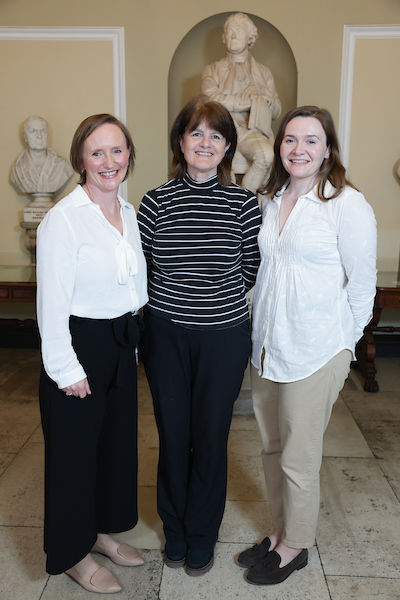
On Monday, 28 April, Professor Lorna Lopez was invited to take part in the Genome for Ireland launch event, held at the Royal College of Surgeons in Ireland (RCSI). The event brought together researchers, clinicians, and members of the public to reflect on a central question: What is the value of public genome sequencing for science, medicine, and patients?
Lorna was invited to speak from a researcher’s perspective, highlighting the importance of advancing genomic research in Ireland and the transformative potential of this initiative for our understanding of complex conditions such as autism. At Maynooth University, our research group focuses on the genetic underpinnings of neurodevelopmental conditions and sleep, particularly through our FamilySleeps, FamilyGenomics and AmbientBD projects. Public genome sequencing can be a game changer for this work – enabling large-scale, inclusive research that reflects the diversity of Irish families.
A sincere thank you to Gianpiero Cavalleri, Laura Whelan, Tembi Fashina and the entire Genome for Ireland team for organising such a timely and important event. You can read more about the initiative here.
It’s an exciting time for genomics in Ireland – and frankly, about time too. These conversations are long overdue. As we mark World Autism Month and Autism Acceptance Month in April initiatives like Genome for Ireland remind us how critical it is to build research infrastructures that can meaningfully support all families.
Third Sensory Friendly Night at Maynooth University

At Maynooth University, we are passionate about making science accessible and enjoyable for everyone. Our third Sensory Friendly Science Night was a delightful celebration of exploration and discovery, featuring a rich variety of hands-on experiments designed to engage young minds. Participants had the opportunity to extract DNA from bananas, peer through microscopes at fascinating specimens, examine real skulls, experiment with pH levels using colourful indicators, and create the popular "elephant toothpaste" – a bubbly demonstration that delighted both kids and adults alike.
This year, we welcomed 22 enthusiastic children, ages 5 to 13, who eagerly participated in these exciting activities. Our dedicated lab team members (Aung, Angeline, Carina and Enya) were instrumental in guiding the young explorers, ensuring a supportive and interactive environment for all. As the only university currently offering such a dynamic and inclusive event, we are hopeful about the prospect of collaborating with other institutions in the future to expand these enriching experiences.

Ambient-BD First Research Participant
Our first research participant, Aung Myat Phyo gets set up for sleep monitoring with research assistant and PhD student Seán Farrell in the Ambient-BD research study. This study is a led collaboratively with Dr Cathy Wyse and Dr Lorna Lopez in the Biology Department with Professor Andrew Coogan in the Psychology Department, and with The University of Edinburgh and TU Munich, funded by The Wellcome Trust.
Brain Awareness Week 2024
The Family Genomics Group produced two short videos for Brain Awareness Week and World Sleep Day 2024.
Our first video showcases the work that our PhD students are undertaking in our lab, while the second video provides evidence-based tips for improving brain health through better daily practices.

Oireachtas Joint Committee on Autism
Dr Lorna Lopez joined the Oireachtas Joint Committee on Autism to discuss Autism Policy with Science Foundation Ireland on 31st January 2023.
Please follow this twitter link, Oireachtas Joint Committee meeting on Autism, to see the entire committee meeting.
An illustrated exploration of autism genomics research processes: Sample to Sequence
This next video of this series, 'An illustrated exploration of the genomics of autism,' discusses how biological samples are collected, processed and sequenced.
To find out more about this process, please watch our Sample to Sequence video.
An illustrated exploration of autism genomics research processes: Data Provenance
The first video of this series, 'An illustrated exploration of the genomics of autism,' discusses data provenance.
To find out more about a family's data journey in genomics research studies, please watch our Data Provenance video.
Women blazing a trail in STEM, perspectives from Sweden and Ireland
This year's St. Brigid's Day event celebrated Irish Women's achievements that reside in both Ireland and Sweden.
The Irish embassy in Sweden marked this day by hosting five speakers from Maynooth University and the Karolinska Institutet that discuss opportunities and remaining challenges for women in STEM.

UK Biobank
PhD student, Thomas Dinneen, hosted a workshop event for researchers that gathered experts and researchers in the field of biomedical science that use the UK Biobank.
They discussed the important need for big data resources in Ireland and how they use this database for data analysis.
Royal College of Surgeons in Ireland Mental Health Educate
The Royal College of Surgeons in Ireland has created a Mental Health Educate website for youth and teachers that provides educational mental health resources through a range of animation series. Please keep scrolling to see the educational video Lorna helped contribute to for this series (Journey through the brain).
Dr Lorna Lopez interview
On International Women's Day 2019, to celebrate women in STEM, Dr Lorna Lopez spoke with Science Broadcaster, Jonathan McCrea.
Please watch if you wish to know more about one of our current projects funded by Science Foundation Ireland.
What's next in Autism genomics?
In 2019, Dr Lorna Lopez and Professor Louise Gallagher organized a research engagement event and invited families living with Autism.
This highly successful event allowed participants to engage with researchers to discuss the importance of the community’s perspective and practical directions to make sure every phase of our research projects are more inclusive of the Autism community.
What is Autism genomics?
During Dr Lorna's Lopez's time in Trinity College Dublin, she hosted a public engagement event to communicate the advancement of Autism genomics research.
Please play the video if you wish to know more about Autism genomics. To find out more about the talks given at this event, please visit the Autism Trinity Translational Medicine Institute webpage
Journey through the Brain